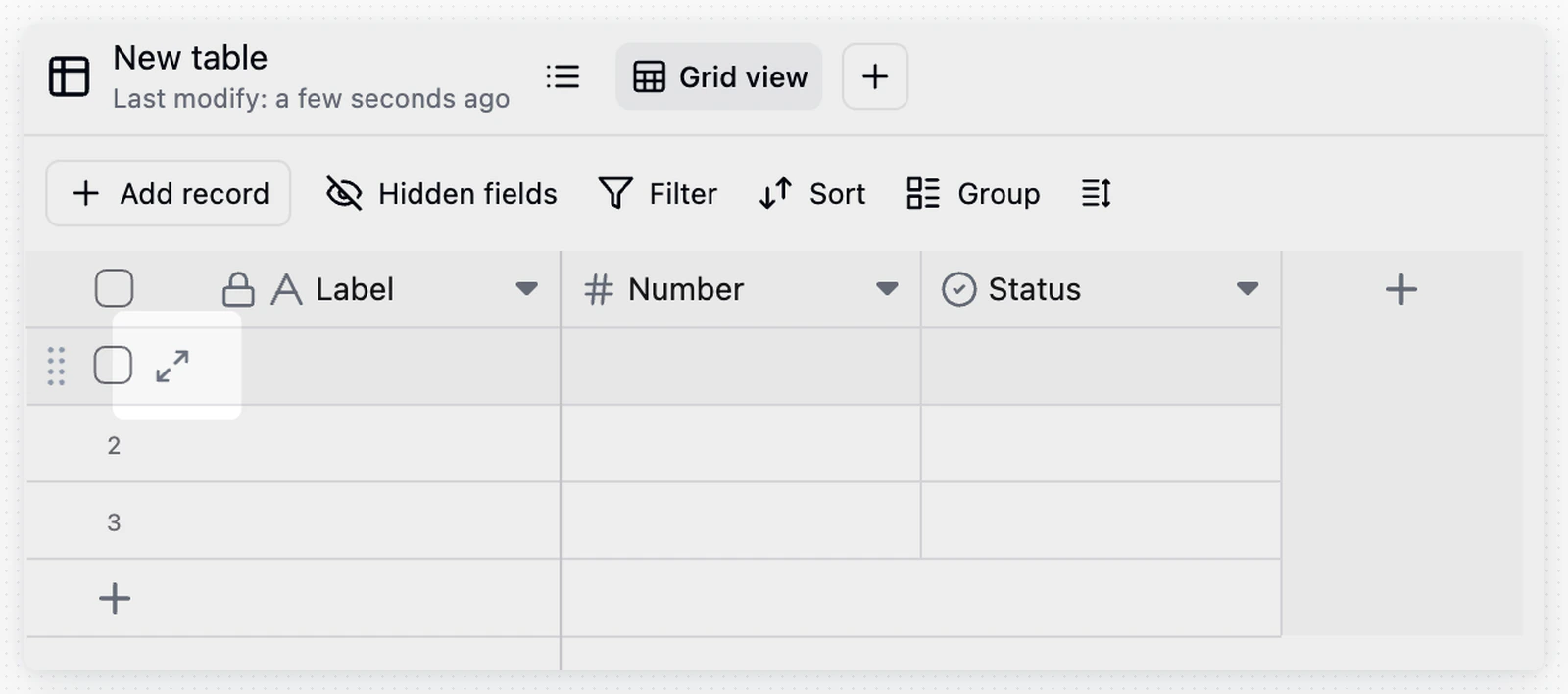

Records store complete data entries. Each record is made up of multiple fields. For example, a customer record can include name, phone number, owner, and follow-up status. An order record can include order number, customer, amount, and delivery date.
Basic Concepts
| Concept | Description |
|---|
| Record | A row of data in a table |
| Field | An attribute in a record, corresponding to a table column |
| Cell | The value of one record under one field |
| Primary field | The main display name of a record, often used in mobile lists and linked record selectors |
Create Records
You can create records in the following ways:
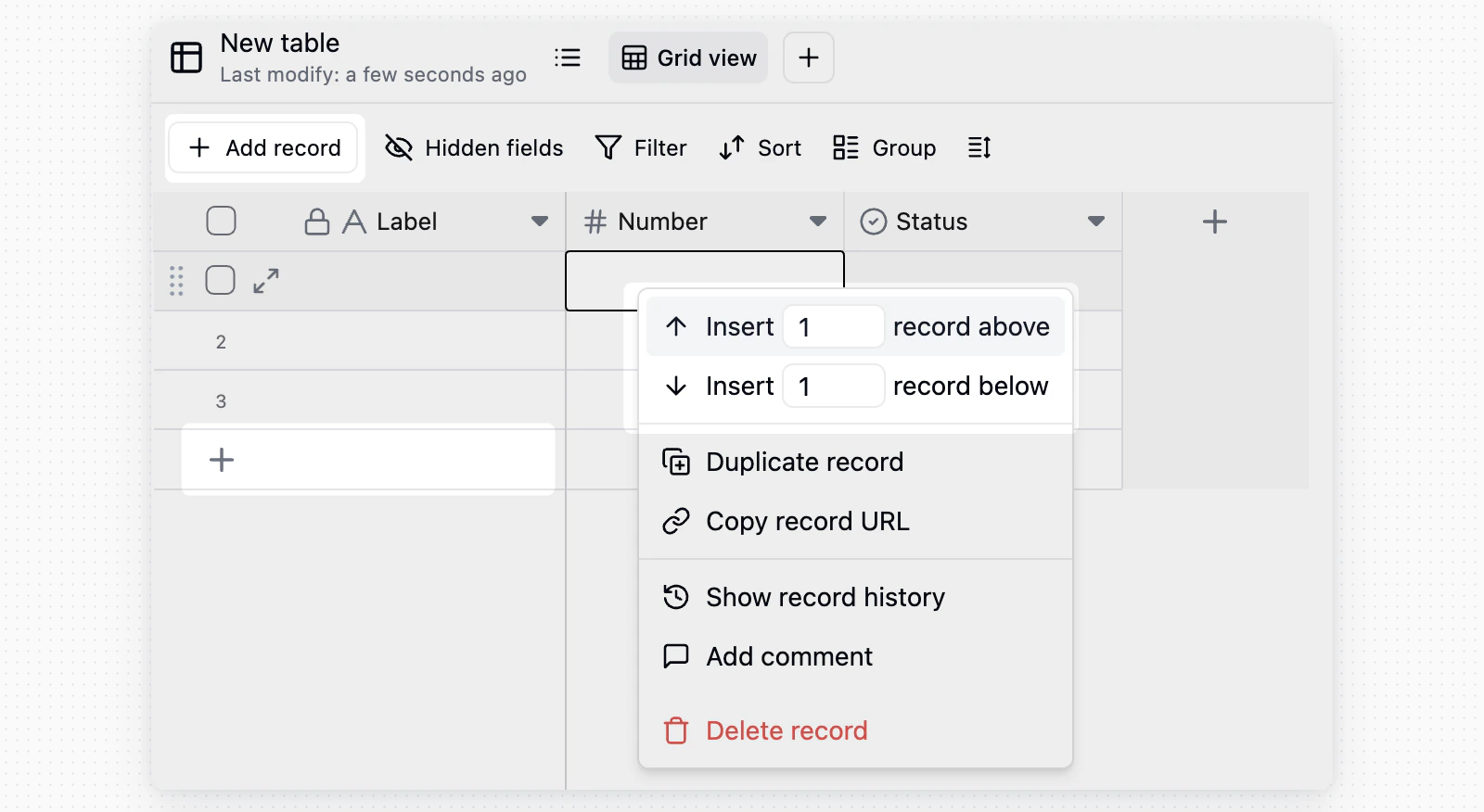
| Entry | Action |
|---|
| Bottom of the table | Click the + button at the bottom of the table view to add a record at the end |
| Top toolbar | Click + Add record on the left side of the toolbar |
| Context menu | Right-click an existing record and insert a record above or below it |
Edit Records
- Edit a cell: Click any cell and enter or change its content.
- Clear content: Select one or more cells, then press
Delete or Backspace.
- Bulk select: Drag with the mouse to select multiple cells or records, then edit, delete, or copy them.
- Copy and paste: Copy and paste one or more cells. If the pasted data has more rows than the current table, Teable automatically adds new rows.
Delete Records
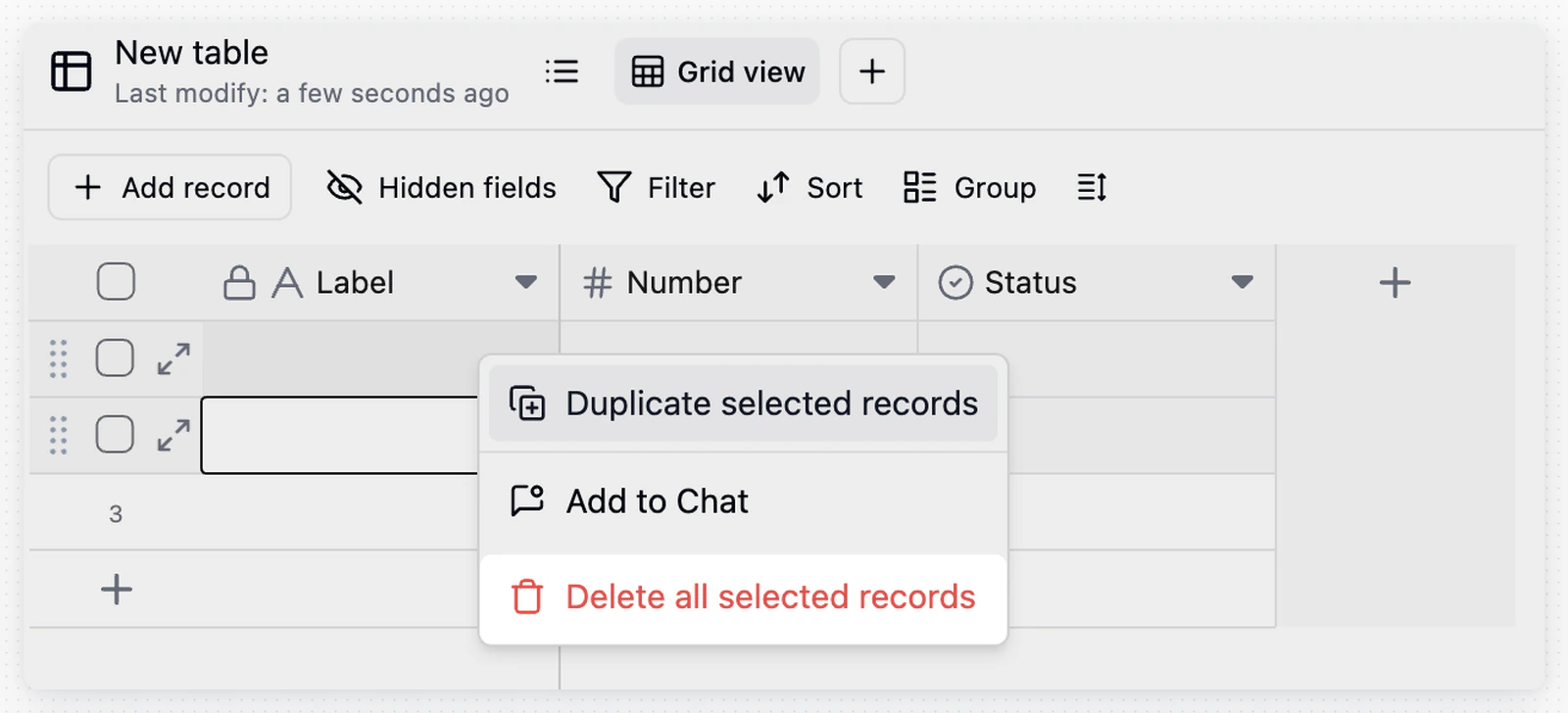
Select one or more records, then right-click and choose Delete record. For bulk deletion, you can select the checkboxes at the beginning of rows before deleting them.
Record Details
Click the expand icon at the beginning of a record row, or select a record and press Space, to open the record detail card.
The detail card is useful for records with many fields. You can browse fields vertically on one page, reduce horizontal scrolling, edit fields, view comments, and check record history.
Collaboration and Tracking
| Feature | Description |
|---|
| Comments | Each record has its own comment area for discussing specific data, @mentioning teammates, or adding context. See Comments. |
| Record history | Teable records record changes so you can trace updates. See Record History. |
| Linked records | Use a Link field to connect records across tables. See Link Field. |
Notes
- The primary field is used as the main display name of a record. Put recognizable information such as a name, task title, or order number in the primary field, instead of note-style content.
- Each record has a unique record ID. After opening the record detail card, the string in the browser URL that starts with
rec is the record ID.
- If you cannot edit some records, an administrator may have limited the editable scope through the Authority Matrix. See Authority Matrix.
Last modified on May 26, 2026