

Create and Manage Tables
Adding Tables
In a project, click the+ button in the directory and choose to:
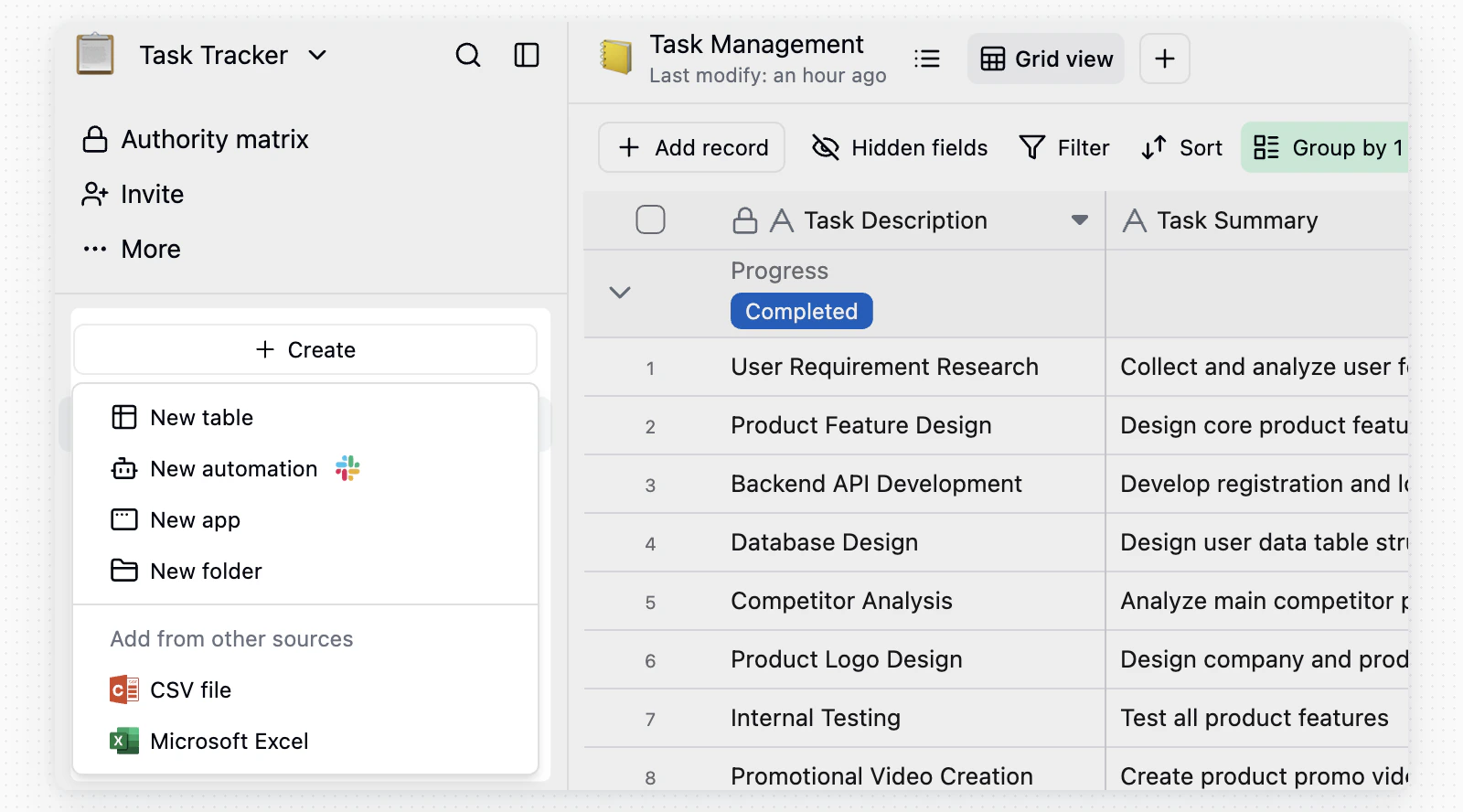
- Create a new blank table
- Import from a CSV file
- Import from an Excel file
- Import from Airtable, if Airtable integration is configured
Renaming & Deleting
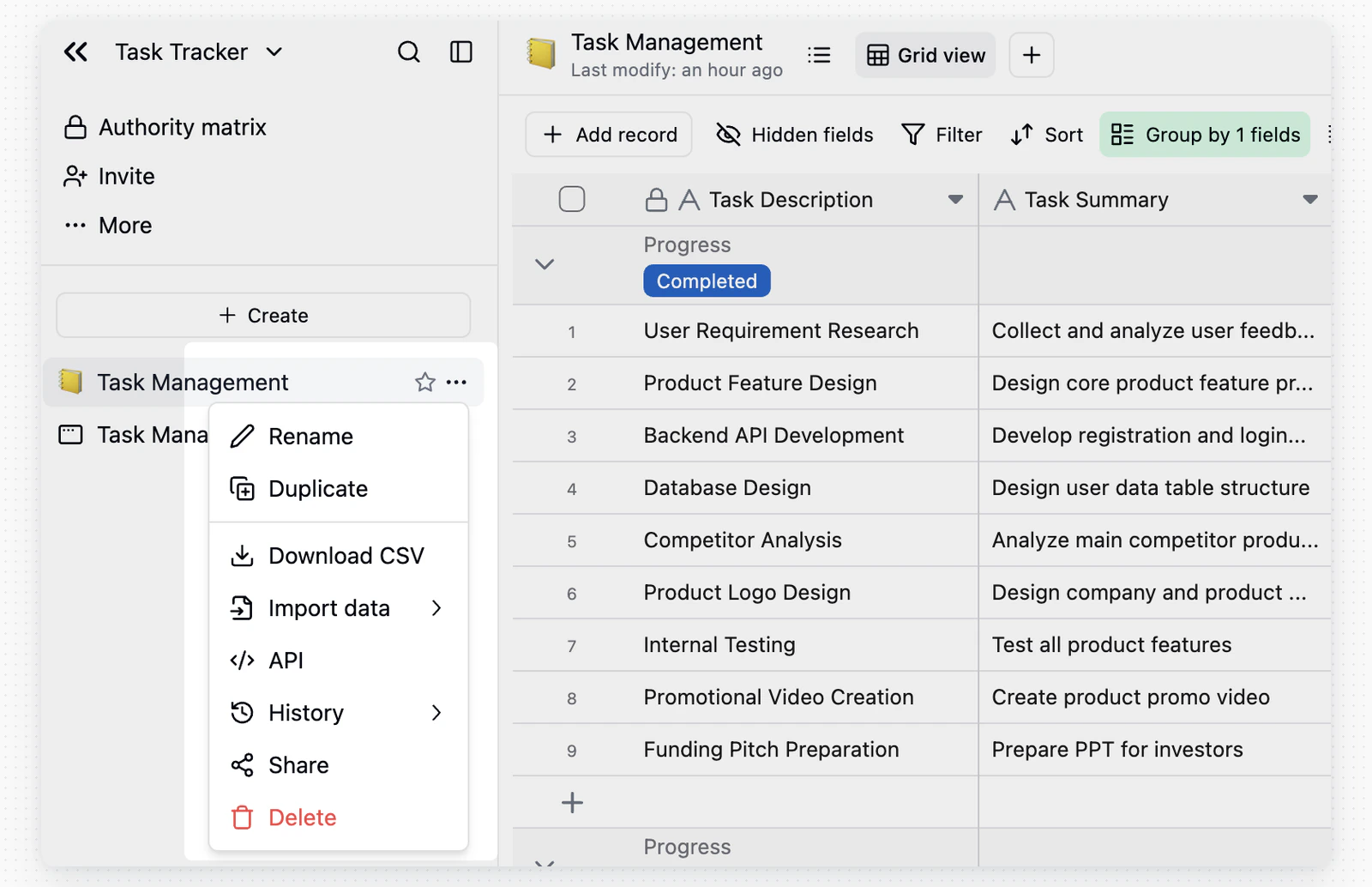
- Rename: Double-click the table name in the directory, edit it, then click anywhere outside to save.
- Delete: Hover over the table in the directory, click
..., then select Delete.
Trash
Click the trash icon in the upper left of the project to manage deleted tables.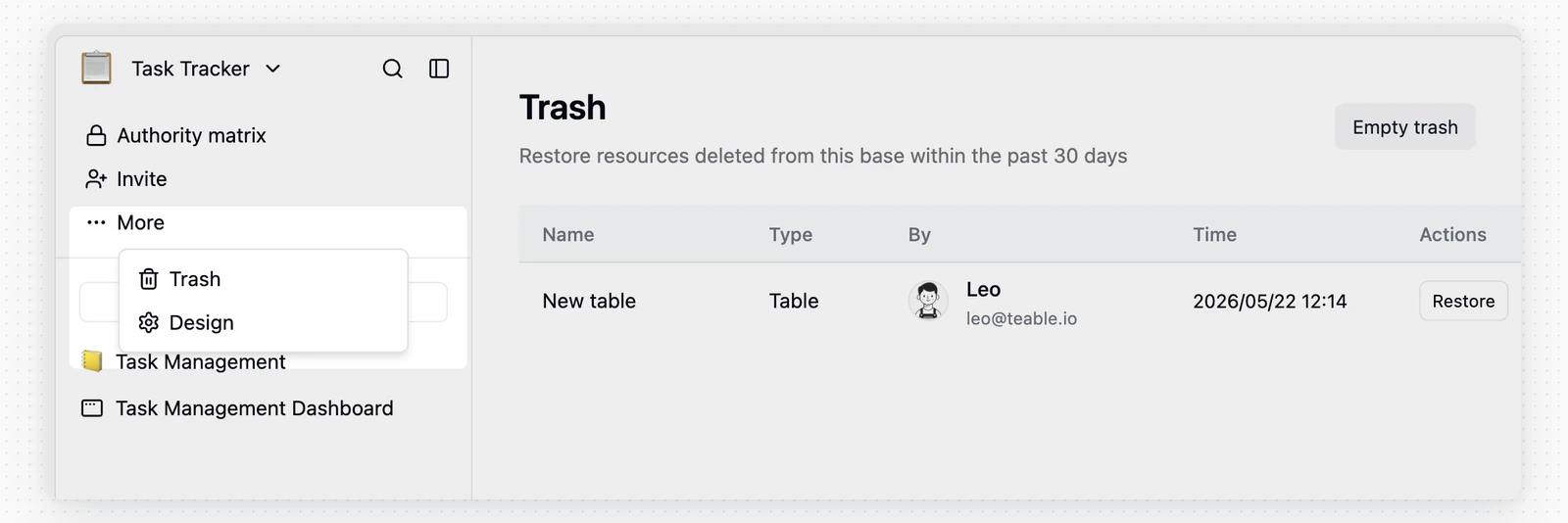
- Restore: Bring the table back to the project with all data intact
- Empty trash: Permanently delete all trashed tables
Restoring a table does not undo the link conversion. Link fields in other tables stay text, so recreate them if you need the connection back.
Design Tables
Click Design in the table menu to view the table’s basic properties: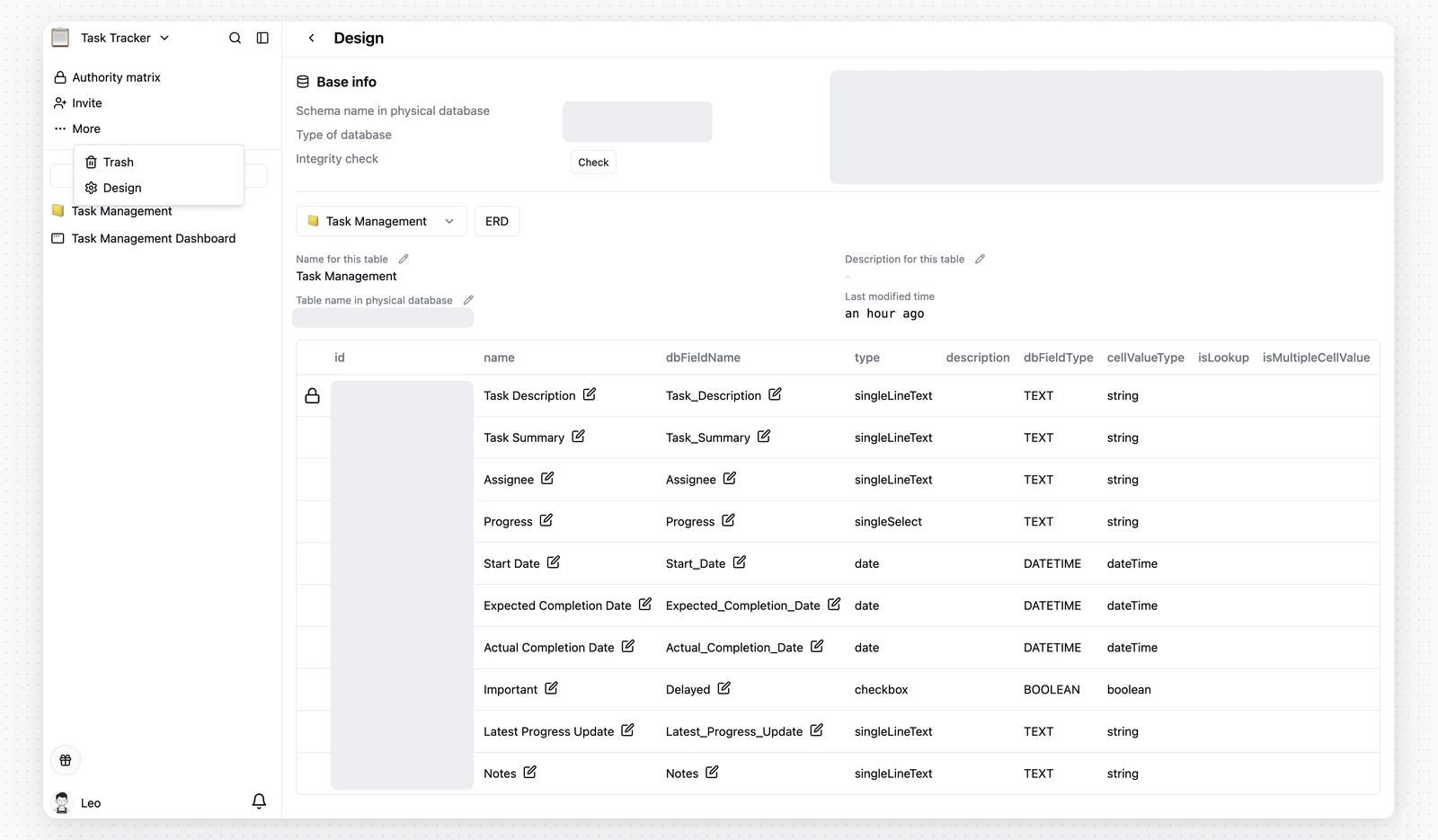
Share and Access Tables
Share a Table
In a table, click Share in the upper-right corner, switch to Share table, and turn on Share to web to generate a share link.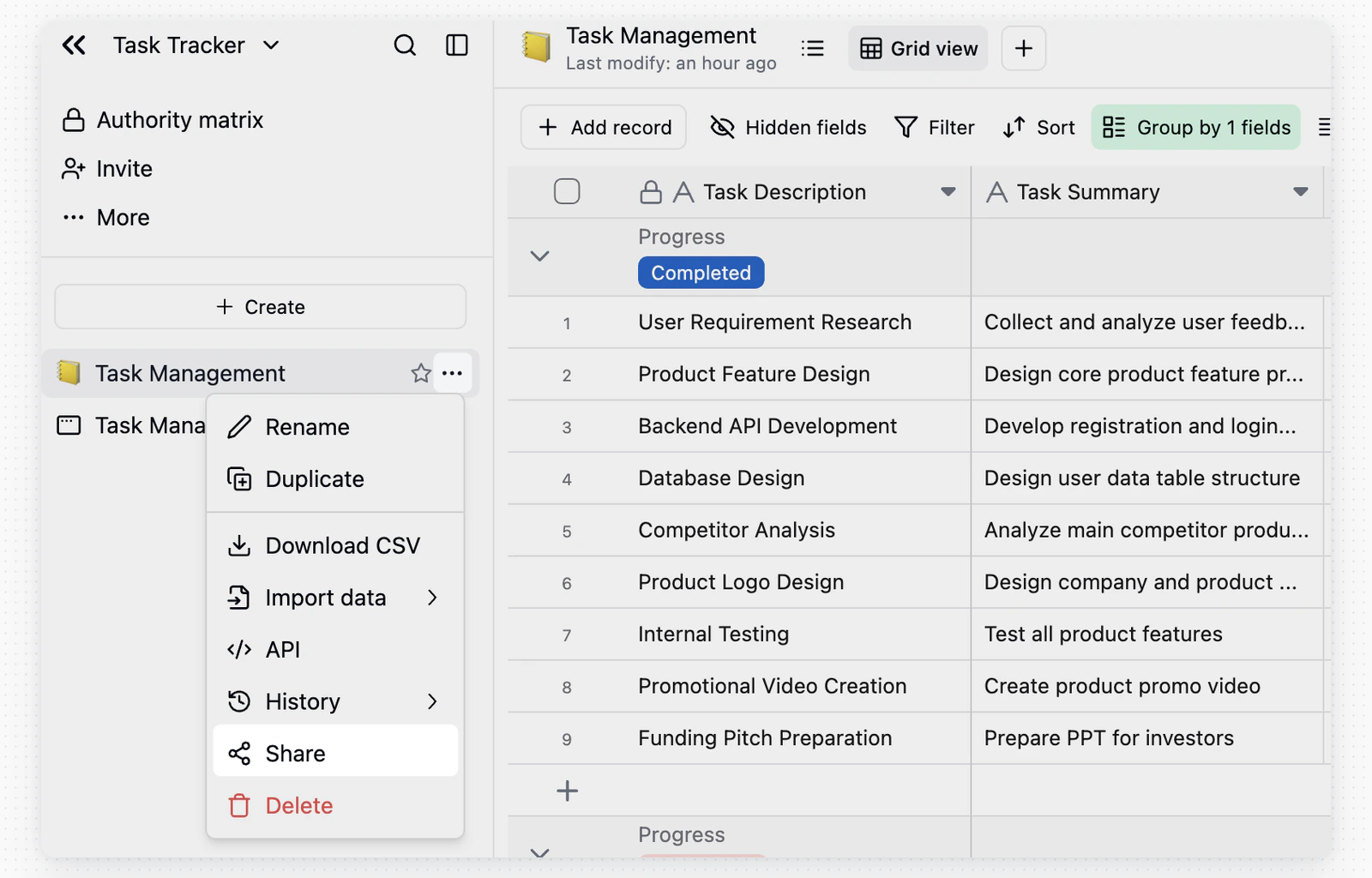
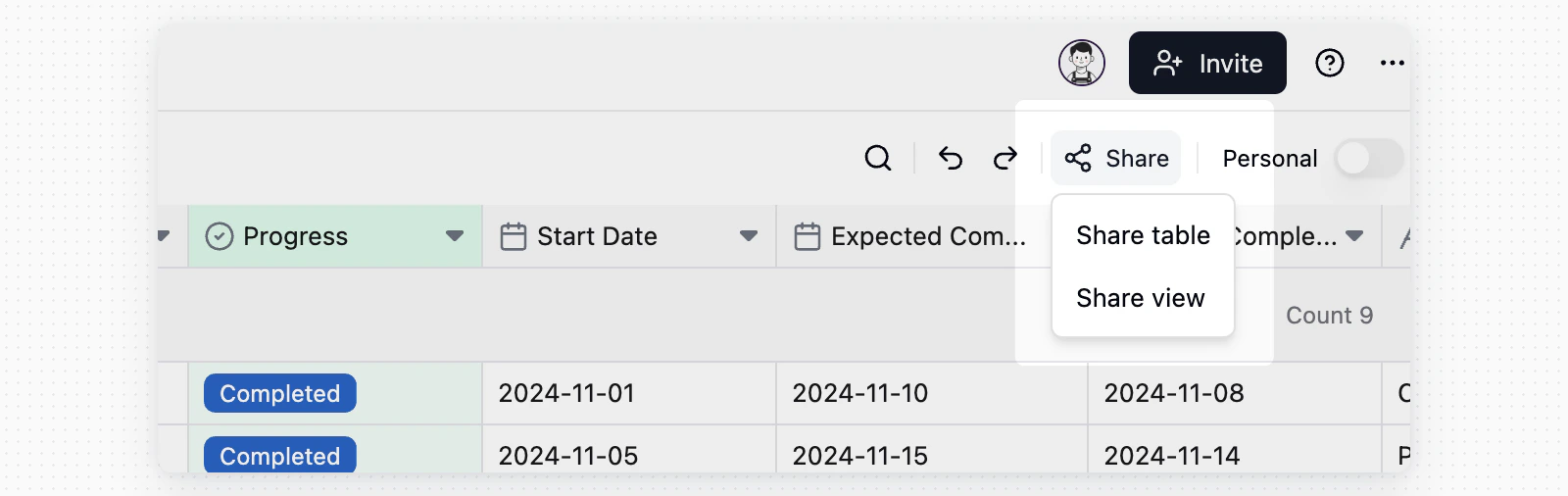
After table sharing is enabled, the Share button appears in a gray shared state in every view in that table. This state comes from table sharing; it does not mean each view has been shared separately.
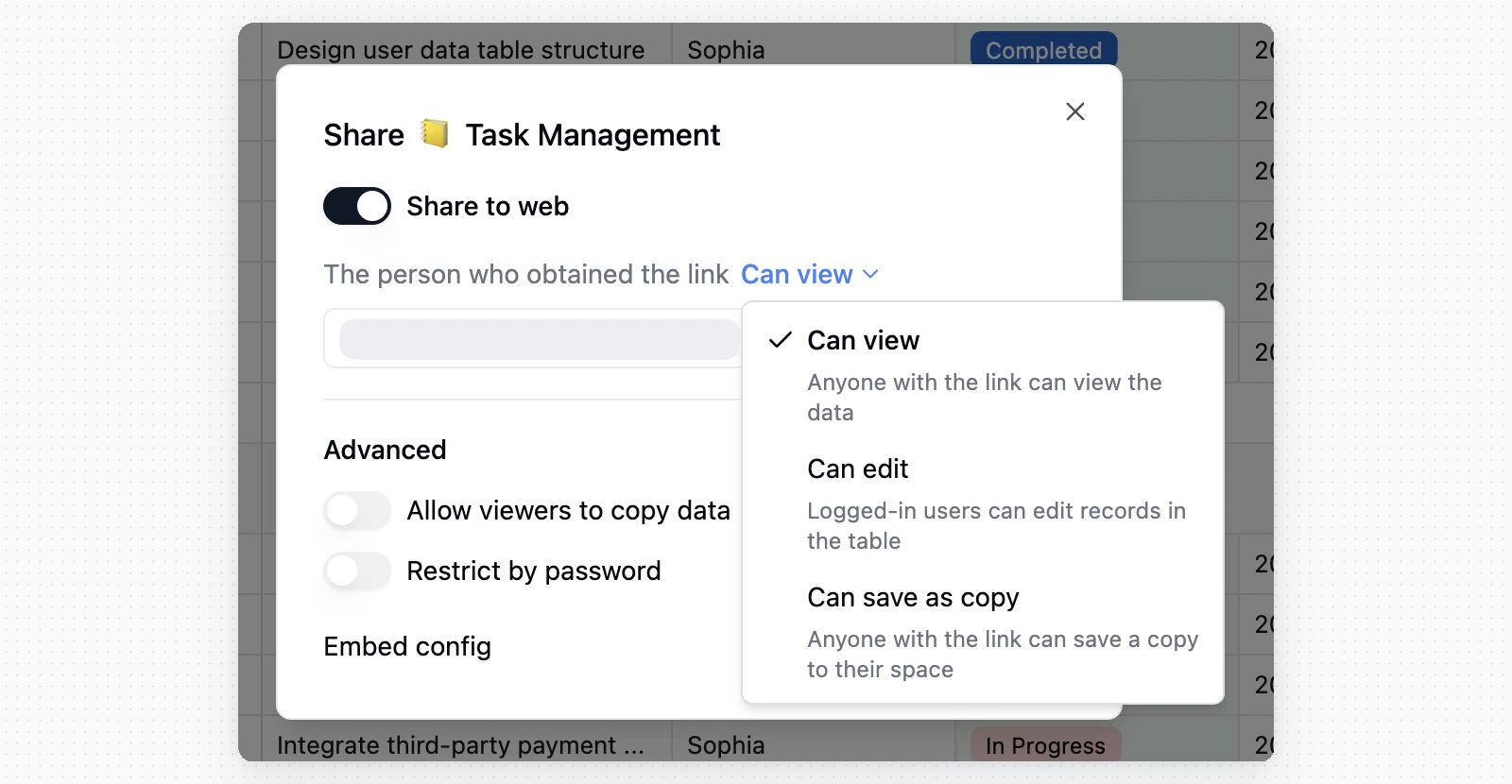
- Can view: Anyone with the link can view table data
- Can edit: Logged-in users can edit records in the shared table
- Can save as copy: Anyone with the link can save a copy to their space
Ways to Access Tables
Tables default to a Grid view and are also accessible via the API. You can create additional views — such as Kanban — to suit different workflow needs.Search and Downloads
Global Search
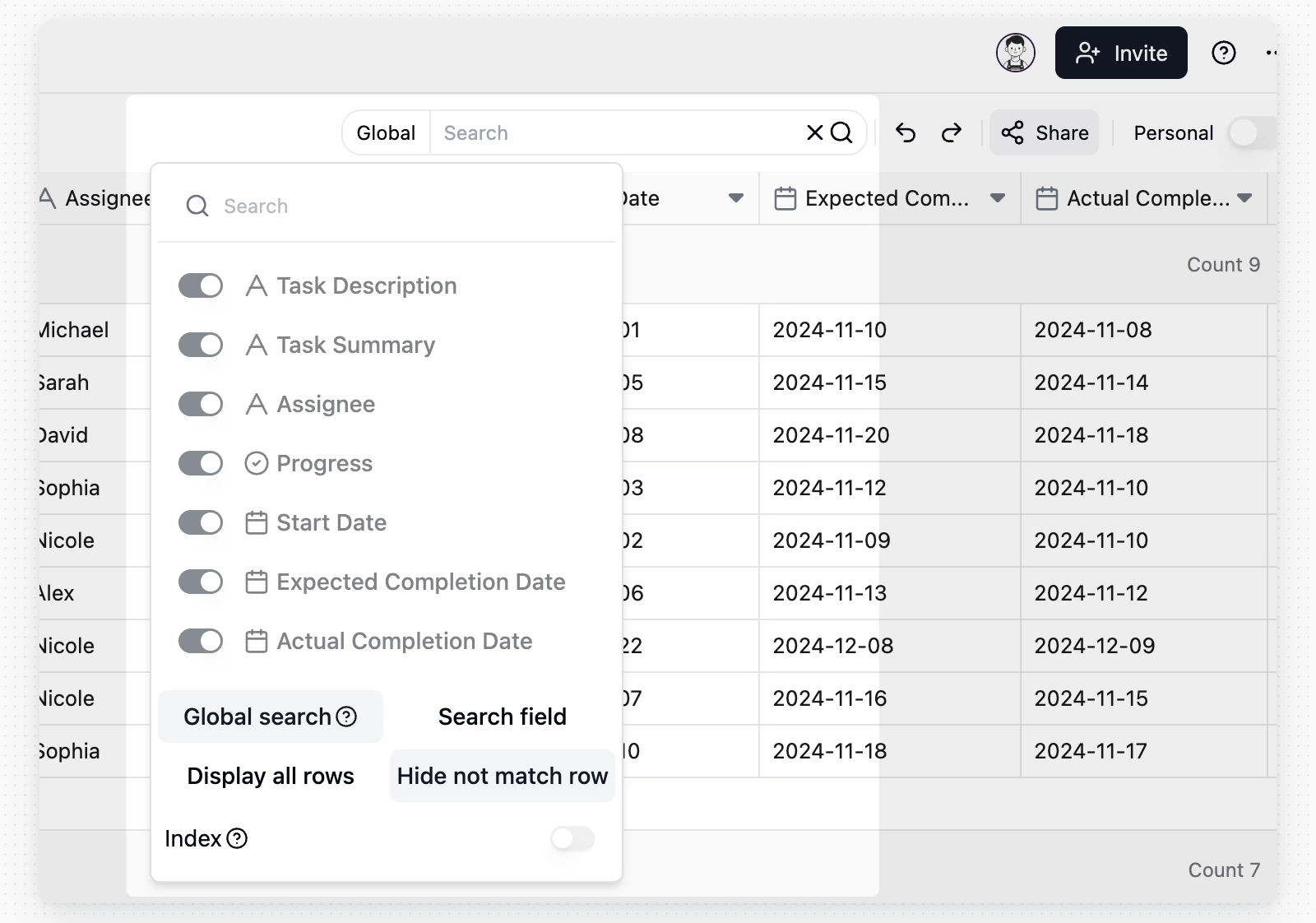
- Turn on Search field to choose which fields to search. This mode supports date fields in addition to text fields.
- Turn off Search field to run a fuzzy search across the fields visible in the current view; fields hidden in that view are not matched. Global search does not include date, checkbox, or button fields. Your instance may also limit how many fields global search can cover.
- Turn on Hide not match row to show only matching records. Turn it off to keep all rows visible and highlight matches.
- For large tables, editors can turn on Index to improve search speed. Building or updating the index can temporarily affect read and write performance.
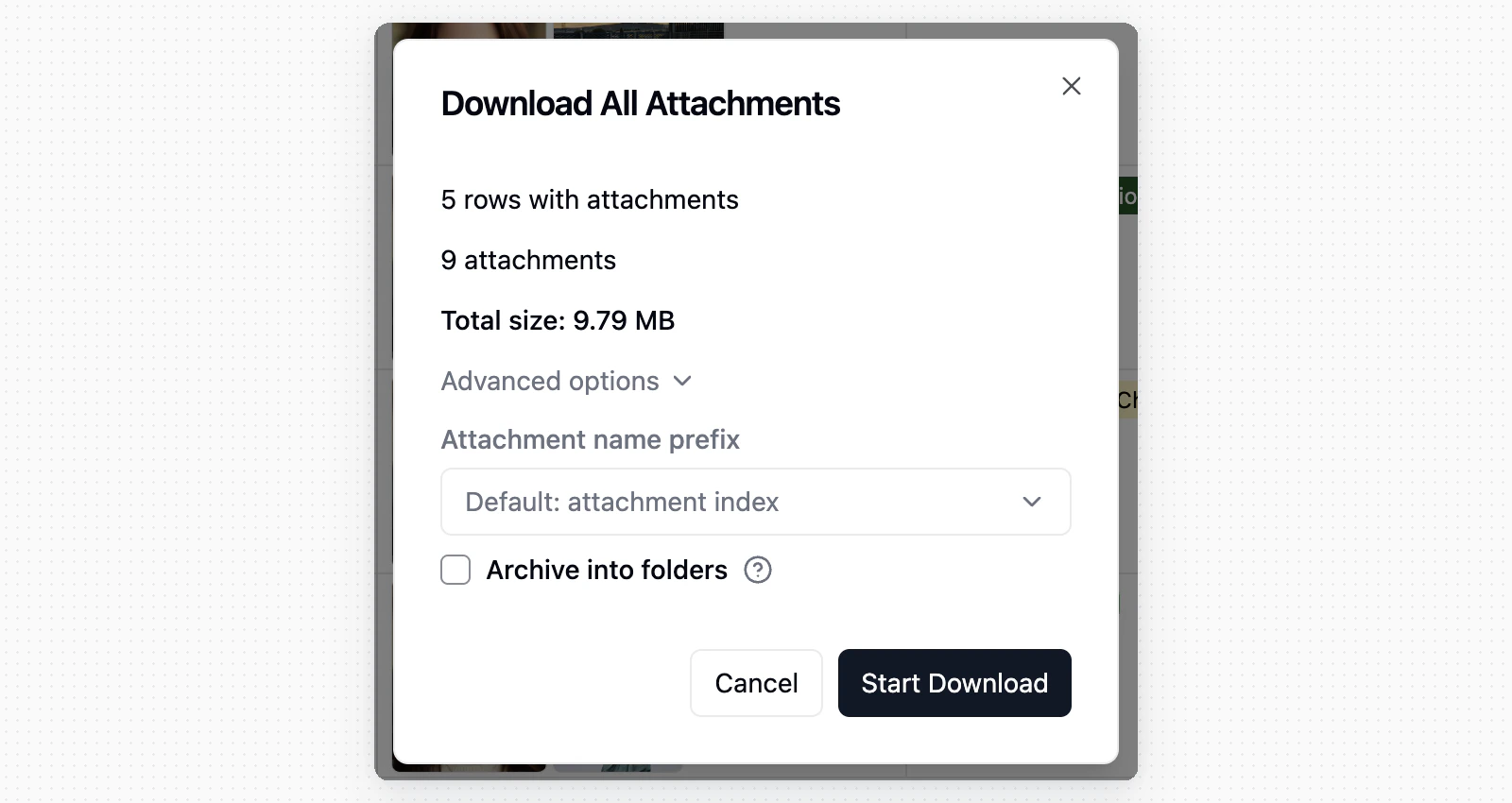
Attachment Downloads
Bulk attachment downloads respect the current search results and include only attachments from matching records.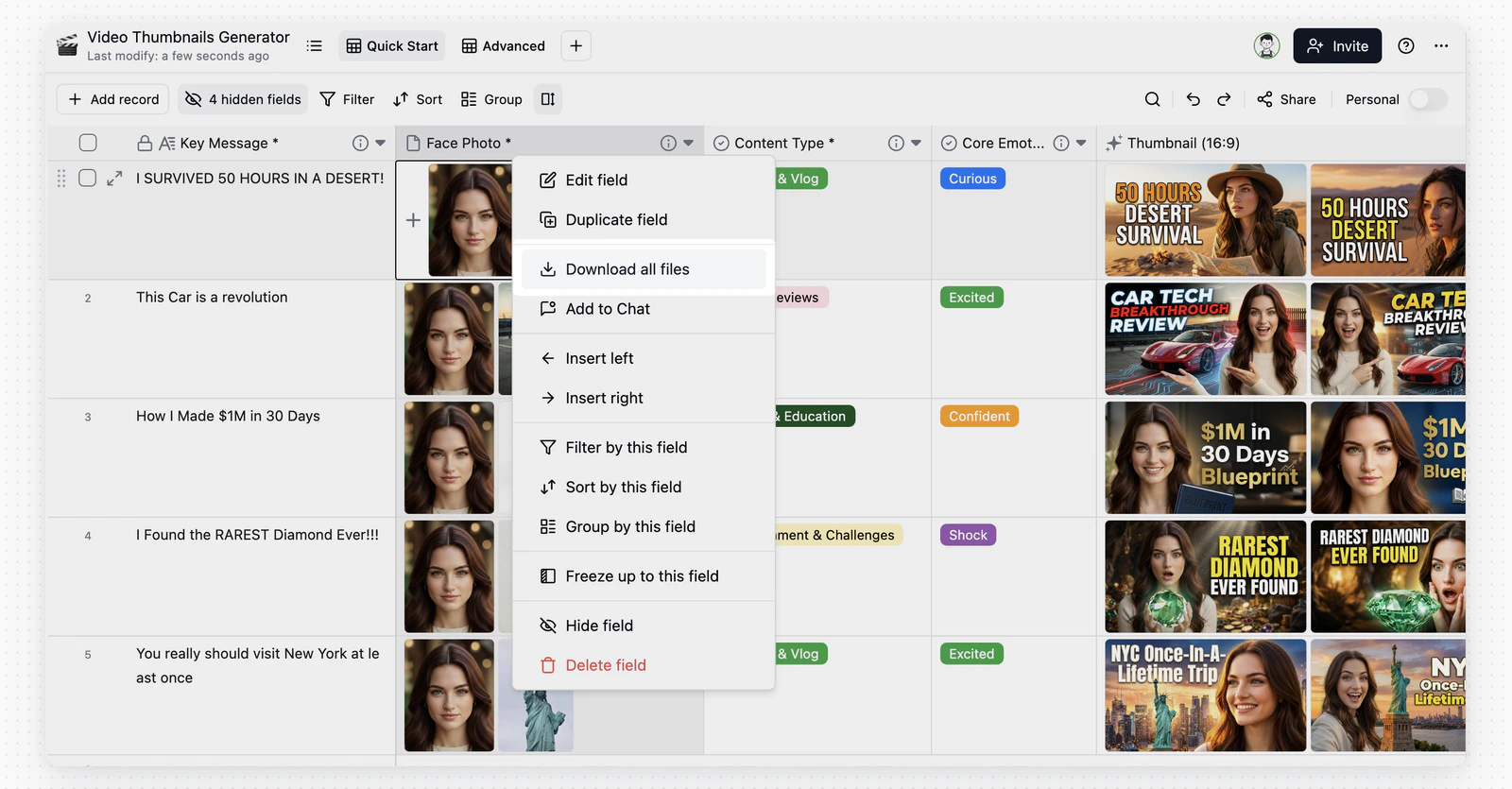
FAQ
Why can't I enter text in a Number column?
Why can't I enter text in a Number column?
Teable is stricter than Excel — each column has a fixed data type, and a Number column only stores numbers. This constraint ensures data integrity and is the foundation for advanced filtering and automation. See Teable vs Excel for details.
What should I check before deleting a table?
What should I check before deleting a table?
Check whether the table is referenced by linked fields in other tables. Deleting the source table may cause data display issues in linked tables.